

Exploring Research Prospects and Collaboration Opportunities: Discussion of Strategic Projects Held at HSE University

On June 26 and 27, HSE University at Pokrovka hosted a discussion of potential partnerships between the university's research teams and strategic projects under the Priority 2030 programme. During the two-day session, the heads of strategic projects presented the main areas of their ongoing research, highlighted some of the key results achieved, and shared their vision for involving new researchers in the projects.
The session participants were welcomed by Natalia Vatolkina, Deputy of Vice Rector Elena Odoevskaya who coordinates the implementation of the HSE Development Programme. The speaker presented the goals and objectives of the session, introduced the Priority 2030 academic leadership programme, and highlighted the role of strategic projects in the transformation of HSE University.
The Priority 2030 programme aims to support the development of Russian universities, to enhance their scientific and technological potential, and to increase their contribution to achieving Russia's national development goals and ensuring access to quality higher education across Russian regions. The programme involves over 140 universities in 56 regions of Russia, including 54 within the framework of specialised tracks. In 2024, HSE University ranks first among the programme participants in terms of grant amount, thus establishing itself as one of the leaders in the Research Leadership track.
Strategic projects are portfolios of research initiatives under a shared theme. They aim not only to achieve new scientific results with high potential for transfer to the economy and the social sphere but also to drive institutional transformations within HSE University to meet its target model under the Priority 2030 programme. Every year, over 1,000 researchers from more than 55 subdivisions of HSE University participate in the implementation of strategic projects.
Two main models of cooperation between research teams and strategic projects were outlined at the seminar. Researchers can either use strategic projects as platforms to discuss and promote their own scientific results or contribute to shaping the research agendas of the relevant strategic projects. Fuad Aleskerov, Director of the International Centre of Decision Choice and Analysis, proposed conducting an event to showcase work in progress which may be of interest to strategic project teams. Additionally, researchers can propose their own projects for integration into strategic projects.
Presentations by representatives of strategic project teams covered current research areas, future plans, and the competencies they aim to attract to their projects. Presenting the strategic project 'Success and Self-Sustainability of the Individual in a Changing World,' Evgeniy Terentev, Director of the HSE Institute of Education and academic supervisor of the strategic project, outlined the project architecture and pointed out the key elements included in the concept of 'human enhancement.'
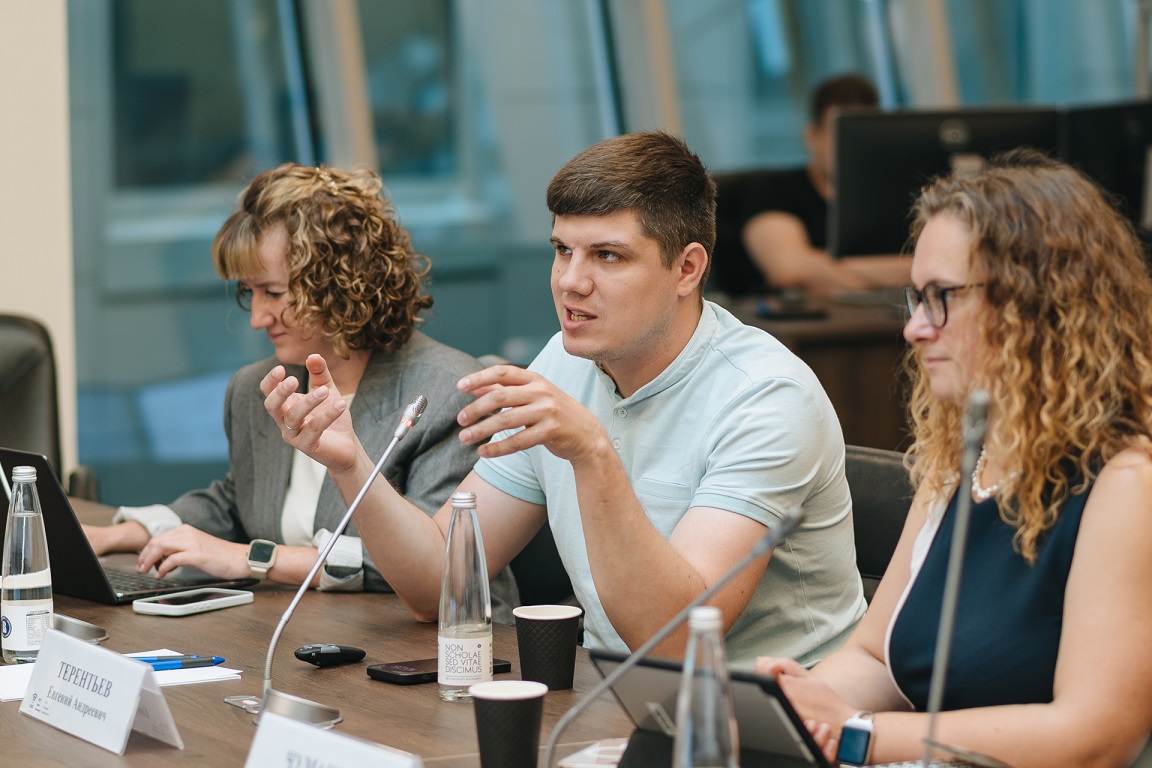
'Today, we are witnessing the emergence of numerous opportunities for human enhancement across various fields. However, there is currently no ongoing monitoring of these emerging opportunities, no established procedure for evaluating the effectiveness of existing tools, and a lack of systematic scientific knowledge on how to encourage people to use these new opportunities. Our strategic project revolves around addressing these three issues,' Evgeniy Terentev said.
The implementation of the strategic project has resulted in several outcomes: the first wave of monitoring the use of human enhancement tools has been completed, groundwork has been laid for the development of specific enhancement technologies, recommendations have been formulated to encourage the adoption of engineering and socio-humanitarian technologies by the public, a pool of recommendations for improving existing institutions has been produced, and strategies for student learning behaviour have been identified.
The Strategic Project 'Social Policy for Sustainable Development and Inclusive Economic Growth' was presented by its academic supervisor, Director of the HSE Institute for Social Policy Lilia Ovcharova, and coordinator Svetlana Biryukova. According to the speakers, the strategic project aims to propose a comprehensive model of sustainable social development tailored to the national context. It focuses on creating and promoting evidence-based social policy tools, implementing measures to enhance economic inclusivity, and formulating policies to foster social sustainability and improve the well-being of Russian citizens, particularly that of families.

The project implementation has produced significant results both at the university level and nationally. Lilia Ovcharova also highlighted the role of the strategic project's team as a centre of expertise supporting the development of state social policy measures.
Lilia Ovcharova emphasized the importance of attracting new researchers and new initiatives to the strategic project. This is especially important for creating new, in-demand expert analytical products and populating the digital bank of evidence-based social policy measures to support management decision-making, which is one of the key planned outcomes of the strategic project.
Learn more about this strategic project from Lilia Ovcharova's interview.
Presenting the Strategic Project 'Human Brain Resilience: Neurocognitive Technologies for Adaptation, Learning, Development and Rehabilitation in a Changing Environment,' Igor Sokolov, HSE Director for Research and Development and administrative manager of the strategic project, stressed the project team's priority of developing technologies that enhance human abilities, or 'augmented intelligence,' which place the individual in the centre and organise technologies around and for the individual. To achieve this, HSE University has been developing a distributed neurocognitive cluster that includes teams from all its campuses.
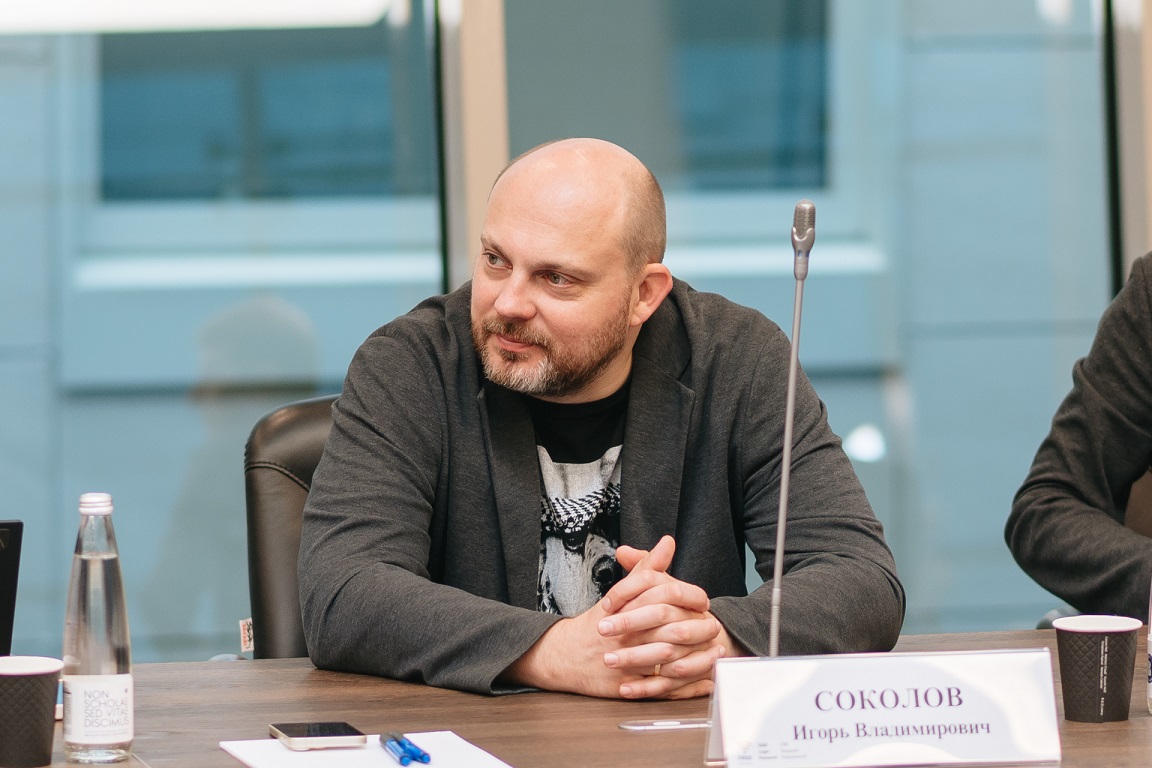
'In the foreseeable future, we believe we will be able to establish the first Centre for Assistive Technologies and Augmented Intelligence to help people solve problems that are otherwise very difficult or impossible to address without such technologies,' according to Igor Sokolov.
By 2030, plans include creating a prototype of a new-generation magnetoencephalograph to support import substitution in this field, developing next-generation neuroprostheses using brain-computer interfaces, creating prototype algorithms for a hearing diagnostic system based on machine learning and neuromodelling, and achieving several other applied results.
In conclusion, Igor Sokolov proposed convening a joint session to explore the possibilities of commercialising the applied results from all strategic projects, with the participation of the HSE Network Centre for Technology Transfer. Additionally, he emphasised the importance of popularising science and building competencies in science journalism to successfully promote HSE University's research in the field of cognitive neuroscience.
The Strategic Project 'National Centre of Science, Technology and Socio-Economic Foresight' was presented by Mikhail Goland, Director of the HSE Centre for Strategic Forecasting and administrative head of the project. According to Mikhail Goland, the primary goal of the strategic project is to establish a global centre of excellence in forecasting based at HSE University, and key objectives include developing a series of medium- and long-term forecasts to create a comprehensive future outlook, while identifying priorities for advancing science, technology, economic sectors, and social innovations. The project also aims to foster a scientific school of forecasting at the university, particularly by involving students, including doctoral students, in related projects, and promoting a culture of foresight studies in Russia and internationally.

The most significant results of this strategic project to date include conducting a large-scale study on scenarios for Russia's socio-economic development until 2030, establishing a library of methods, models, and tools for scientific, technological, and socio-economic forecasting, producing a series of high-level monographs on scientific and technological forecasting and foresight, and launching several educational programmes in this field.
The new Strategic Project 'Human-Centred AI ,' initiated in 2024, was presented by Alexey Masyutin, Director of the HSE AI and Digital Science Institute, and Elena Kozhina, coordinator of this strategic project and projects in AI and digital science, and Deputy to Vice Rector Elena Odoevskaya.

The main goal of the project is to develop a series of products using AI technologies that assist people in areas such as education, management, and medicine. Priorities for the coming years include the development of AI assistants to help HSE University's students and staff with routine tasks and to contribute to the educational process and applications to enhance the diagnostic capacity in spinal surgery and postoperative rehabilitation for the university’s partner healthcare providers. Another envisioned area of focus is market research to identify sectors where the introduction of artificial intelligence technologies holds the most promise.
The key advantage of the strategic project lies in the team's extensive experience in developing and implementing products across various industries, which they are prepared to share with other researchers at HSE University. In its turn, the strategic project is actively seeking new ideas for AI products that can enhance human life.
Ideas and suggestions
Throughout the session, participants asked questions about each project, discussed prospects for cooperation with various stakeholders, and offered ideas for project development. The attending researchers were interested in whether market assessments had been conducted for the projects, how product testing would be performed, how interdisciplinary teams could be recruited within HSE University, whether there were prospective customers and external inquiries, and how project team members were responding to them.

Wrapping up the session, Natalia Vatolkina invited participants who were not yet on the strategic project teams to share their ideas on the project content and ways to promote the results.
See also:

Banking Crises Drive Biodiversity Loss
Economists from HSE University, MGIMO University, and Bocconi University have found that financial crises have a significant negative impact on biodiversity and the environment. This relationship appears to be bi-directional: as global biodiversity declines, the likelihood of new crises increases. The study examines the status of populations encompassing thousands of species worldwide over the past 50 years. The article has been published in Economics Letters, an international journal.
Scientists Discover That the Brain Responds to Others’ Actions as if They Were Its Own
When we watch someone move their finger, our brain doesn’t remain passive. Research conducted by scientists from HSE University and Lausanne University Hospital shows that observing movement activates the motor cortex as if we were performing the action ourselves—while simultaneously ‘silencing’ unnecessary muscles. The findings were published in Scientific Reports.
HSE Scientists Reveal What Drives Public Trust in Science
Researchers at HSE ISSEK have analysed the level of trust in scientific knowledge in Russian society and the factors shaping attitudes and perceptions. It was found that trust in science depends more on everyday experience, social expectations, and the perceived promises of science than on objective knowledge. The article has been published in Universe of Russia.
HSE Seeks New Ideas for AI Agents: Initiative Competition Launched
HSE University is inviting researchers and lecturers to present concepts for new digital products based on artificial intelligence. The best projects will receive expert and technological support. Applications are open until December 19, 2025.
IDLab: Fascinating Research, Tough Deadlines, and Academic Drive
The International Laboratory of Intangible-driven Economy (IDLab) was established at the HSE campus in Perm 11 years ago. Its expertise in data processing and analysis allows researchers to combine fundamental studies with applied projects, including the development of risk and cybersecurity models for Sber. The head of the laboratory, Professor Petr Parshakov, and Senior Research Fellow Professor Mariya Molodchik spoke to the HSE News Service about IDLab’s work.
HSE Lecturers Awarded Yandex ML Prize 2025
The Yandex ML Prize is awarded to lecturers and heads of educational programmes who contribute to the development of artificial intelligence in Russia. This year, 10 laureates were selected from 300 applicants, including three members of the HSE Faculty of Computer Science (FCS). A special Hall of Fame award was also presented for contributions to the establishment of machine learning as an academic field. One of the recipients was Dmitry Vetrov, Research Professor at the HSE FCS.
HSE University and Banking and Finance Academy of Uzbekistan Sign Memorandum on Scientific Cooperation
The partnership aims to foster academic collaboration in the fields of global economics, sustainable development, and Islamic finance. Strengthening academic ties with Uzbekistan represents a promising direction for scientific exchanges and the implementation of international projects in sustainable development.
HSE Scientists Optimise Training of Generative Flow Networks
Researchers at the HSE Faculty of Computer Science have optimised the training method for generative flow neural networks to handle unstructured tasks, which could make the search for new drugs more efficient. The results of their work were presented at ICLR 2025, one of the world’s leading conferences on machine learning. The paper is available at Arxiv.org.
Neural Network Trained to Predict Crises in Russian Stock Market
Economists from HSE University have developed a neural network model that can predict the onset of a short-term stock market crisis with over 83% accuracy, one day in advance. The model performs well even on complex, imbalanced data and incorporates not only economic indicators but also investor sentiment. The paper by Tamara Teplova, Maksim Fayzulin, and Aleksei Kurkin from the Centre for Financial Research and Data Analytics at the HSE Faculty of Economic Sciences has been published in Socio-Economic Planning Sciences.
‘To Help Make the World More Sustainable, Fair, and Humane’
The BRICS International School: New Generation has concluded at HSE University, bringing together more than 100 participants from 38 BRICS and Global South countries. The attendees included early-career researchers, diplomats, entrepreneurs, journalists, and civil society representatives.