

Scientists Develop Effective Microlasers as Small as a Speck of Dust

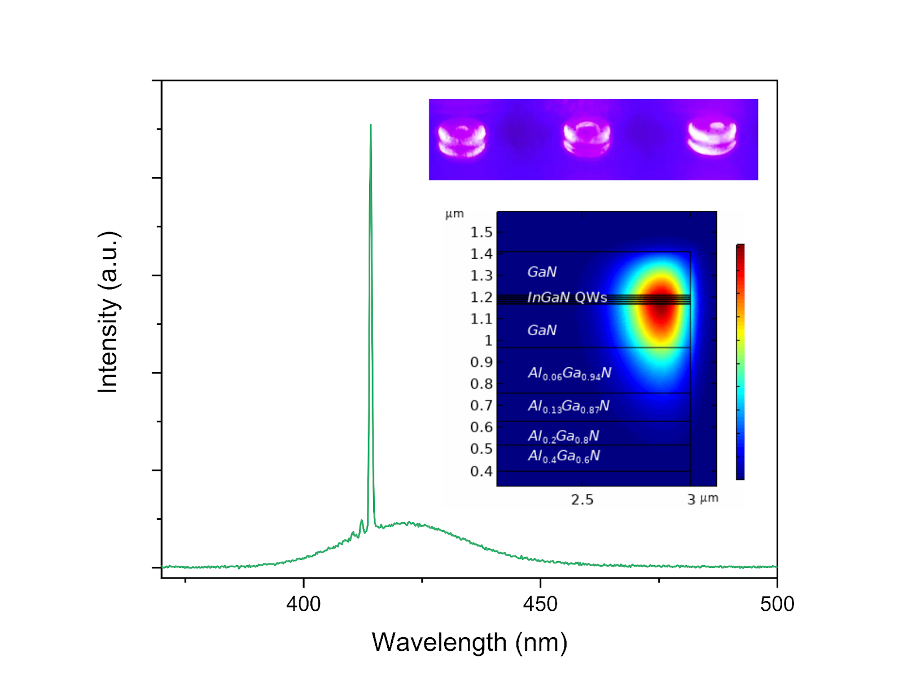
Researchers at HSE University–St Petersburg have discovered a way to create effective microlasers with diameters as small as 5 to 8 micrometres. They operate at room temperature, require no cooling, and can be integrated into microchips. The scientists relied on the whispering gallery effect to trap light and used buffer layers to reduce energy leakage and stress. This approach holds promise for integrating lasers into microchips, sensors, and quantum technologies. The study has been published in Technical Physics Letters.
The devices around us are becoming increasingly compact without sacrificing functionality. Smartphones now handle tasks that once required a computer, and small cameras can capture images with quality approaching that of professional equipment. Miniaturisation has also extended to lasers—sources of directed light that are embedded in optical chips, sensors, medical devices, and communication systems.
However, shrinking a laser while preserving its optical properties, efficiency, and reliability remains a significant challenge. Developing a laser measuring 5–8 micrometres—approximately the diameter of a red blood cell—requires complex calculations, and its fabrication demands high precision. The main challenge lies in the design of the laser itself. Unlike conventional light sources, lasers amplify radiation within a resonator—a structure where light is repeatedly reflected and amplified. The more compact the laser, the harder it is to trap the light inside so that it undergoes continuous reflection and amplification without losing energy, which is essential for stable operation.
Another challenge is the presence of defects in the material. Lasers rely on crystals that can amplify light, but microscopic defects often form during their growth, reducing the efficiency of light generation. To minimise these irregularities, scientists carefully select synthesis conditions and simulate the properties of crystals under various scenarios in advance. However, solving one problem often gives rise to others, turning laser development into a continual search for balance.
HSE scientists have developed microlasers with diameters as small as 5 to 8 micrometres that operate at room temperature. The researchers used a crystal structure composed of indium, gallium, nitrogen, and aluminium compounds grown on a silicon substrate. To trap light in a tiny space, the scientists relied on the whispering gallery effect.
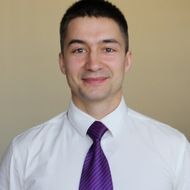
Eduard Moiseev
'This phenomenon is well-known in acoustics: in some churches and cathedrals, you can whisper words against one wall, and the sound will be clearly heard on the opposite wall—even though, under normal conditions, the sound would not travel that far. A similar effect enables light to be repeatedly reflected inside the disk-shaped microlaser, minimising energy loss,' explains Eduard Moiseev, Senior Research Fellow at the International Laboratory of Quantum Optoelectronics, HSE University–St Petersburg.
However, even under these conditions, light waves can partially escape into the substrate and be lost. To prevent this, the researchers added a stepped buffer layer, which compensates for mechanical stresses between the silicon and nitride layers and reduces radiation leakage, enabling the laser to operate stably even at such small sizes.
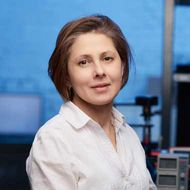
Natalia Kryzhanovskaya
'Our microlasers operate stably at room temperature without the need for cooling systems, making them convenient for real-world applications. In the future, such devices will enable the creation of more compact and energy-efficient optoelectronic technologies,' explains Natalia Kryzhanovskaya, Head of the International Laboratory of Quantum Optoelectronics at HSE University–St Petersburg.
The paper has been prepared as part of a project implemented within the framework of the International Academic Cooperation competition at HSE University.

See also:

HSE Computer Science Researchers Win Gold Medal at International Machine Learning Competition
A team comprising HSE International Laboratory of Statistical and Computational Genomics researchers Aleksei Shmelev and Nikita Chervov, 2025 graduate of the HSE Faculty of Computer Science’s Master’s programme in Data Analysis in Biology and Medicine Ivan Gevorkov, and two students from the United States achieved an outstanding result at the 2026 NeuroGolf international machine learning championship. The team won a gold medal and placed seventh overall.
‘Working with AI Solves a Wide Range of Engineering Problems’
Artificial intelligence is a working tool based on a balanced combination of algorithms and engineering. Experts and doctoral students from the HSE Moscow Institute of Electronics and Mathematics explain how AI technologies can improve an application, device, or system, and what engineering tasks are solved in the process.
‘The Peak of Stupidity’ and ‘The Valley of Despair’: HSE Economists Propose an Explanation for the Dunning–Kruger Effect
The Dunning–Kruger effect, which describes a sharp surge in self-confidence among beginners followed by an equally rapid decline as they gain experience, can be explained by the nature of the learning process and the acquisition of new knowledge. This conclusion was reached by Andrey Vorchik of the HSE Faculty of Economic Sciences together with independent researcher Murat Mamyshev. They developed a mathematical model of learning and demonstrated how subjective confidence is formed and changes as knowledge accumulates, as well as how teachers can reduce the ‘valley of despair’ experienced by learners.
Toffee and Risk: Scientists Discover Why People Who Crave Sweets Make More Impulsive Choices
Having a sweet tooth may be linked not only to eating habits but also to the way people make decisions. Researchers at HSE University have found that people with a preference for sweet foods tend to behave more impulsively—not because they want immediate rewards, but because they are less willing to tolerate uncertainty. These findings may help improve treatments for addiction. The study findings have been published in Frontiers in Psychology.
Advancing Collaboration: HSE Faculty of Computer Science and Harbin Institute of Technology Hold Joint Seminar
From July 13 to 16, 2026, the Faculty of Computer Science hosted the Russian–Sino Research Seminar on Machine Learning Applications, organised by the HSE Laboratory for Cloud and Mobile Technologies in partnership with the Harbin Institute of Technology (China). A delegation comprising seven students and three university representatives travelled to Moscow to take part in an intensive four-day programme.
Physicists Find a Way to Model Ion Parameters in Plasma in Seconds
Researchers from HSE University and the Moscow Institute of Physics and Technology (MIPT) have developed a set of simple analytical methods for calculating the properties of heavy ions in helium under the influence of a strong electric field. The new approach speeds up calculations of ion mobility and ion–molecule reaction rates by thousands of times while maintaining sufficient accuracy for plasma jet modelling. The findings have been published in the journal Physica Scripta.
A New Section on AI and a Prizewinning Paper: Early-Career HSE Researchers Take Part in IEEE EDM Conference
The 27th IEEE International Conference of Young Professionals in Electron Devices and Materials (EDM) has taken place in the Altai Republic. This year, researchers from HSE University presented the results of their research and were involved in organising a new section on artificial intelligence. A paper by HSE master’s student Rodion Sidorenko was awarded third place in the research paper competition at the conference.
Two Years of Growth or Decline: How to Choose an Investment Strategy
Economists from HSE University, together with colleagues from international universities, have analysed stock market movements over almost a century and proposed an investment strategy that could have delivered returns nearly twice as high as the market average. Their research suggests following a momentum strategy during periods of sustained market growth and switching to a value strategy after prolonged market declines. The study has been published in the Journal of Banking and Finance.
Researchers Reveal Link Between Attention and Communication Difficulties in Autism
Researchers at HSE University have examined how communication difficulties in children with autism are related to brain function. The findings show that not only language networks but also attention networks play an important role. The weaker the connections involved in maintaining focus and switching attention, the more pronounced communication difficulties were. The study has been published in European Child & Adolescent Psychiatry.
HSE Initiates Development of Ethical Standard for Anthropomorphic Robots
Beyond technological solutions, the development of anthropomorphic robotics also demands ethical ones. In July 2026, the HSE Institute for Robotics Systems hosted a foresight session dedicated to developing an Ethical Standard for Anthropomorphic Robotic Complexes. Representatives from businesses, government bodies, scientific organisations, and universities gathered to discuss key ethical and legal issues surrounding the development of anthropomorphic robotic complexes. The main outcome of the meeting was a draft of the Ethical Standard.