

Recruitment Campaign 2025: How HSE Attracts Top International Talent

For nearly two decades, HSE University’s international recruitment programmes have brought highly qualified professionals from the global academic job market to Russia—from recent PhD graduates of leading universities to experienced international scholars. On September 1, 2025, the university expects 50 new international faculty and researchers to join its academic team.
The primary aim of international academic recruitment is to form a teaching and research staff capable of carrying out globally recognised research and delivering HSE University’s degree programmes at an internationally competitive level.
The selection process for the 2025 international recruitment campaign concluded in April. Candidates were chosen for two flagship initiatives—the tenure-track international faculty programme and the international postdoctoral fellowship programme. HSE expects to welcome 50 international specialists this autumn: 15 under the tenure-track programme and 35 as international postdocs.
These new colleagues are graduates of PhD programmes at 50 leading universities, including the University of California, Los Angeles (USA), the University of Oxford (UK), Harvard University (USA), the Free University of Brussels (Belgium), the University of Toronto (Canada), the University of Southern Denmark, George Washington University (USA), the University of Pittsburgh (USA), the University of São Paulo (Brazil), the University of Bordeaux (France), Boston College (USA), the Free University of Berlin (Germany), the Indian Statistical Institute, Jawaharlal Nehru University (India), Beijing Institute of Technology (China), and many others.
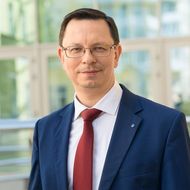
Nikita Anisimov
HSE Rector Nikita Anisimov highlighted a notable feature of the 2025 recruitment campaign. ‘Of the 15 international specialists joining us on September 1 through the international tenure-track programme, nine—that is 60%—are Russian citizens who graduated from top foreign universities. This confirms that our international recruitment efforts also fulfil an important national goal: they support the return of highly qualified specialists to their homeland, to Russia. We are truly pleased with this result. At the same time, the international postdoctoral fellowship programme continues to attract primarily foreign nationals—graduates of top-tier PhD programmes. This year, the vast majority of those who accepted postdoc offers from HSE hold citizenship from friendly countries,’ shared Nikita Anisimov.
Vice Rector Alexey Koshel also gave details about the selection principles and results of HSE’s 2025 international faculty recruitment campaign.
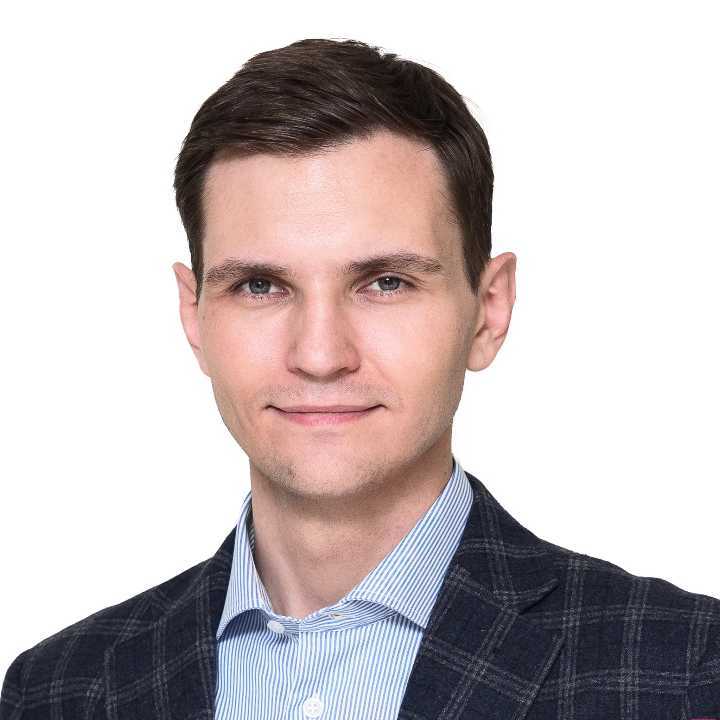
Alexey Koshel
‘This year, members of the subject-specific selection committees and the International Recruitment Committee faced a welcome challenge: the 2025 campaign attracted an exceptionally strong pool of candidates, both in terms of numbers and academic quality. Applications for the international tenure-track faculty programme nearly doubled compared to 2024. As in previous years, the majority of applications—44%—came from candidates in Economics and Finance. Business & Management and Computer Science followed with 10% each, while Linguistics and International Relations & World Economy each accounted for 6.5% of the applications. The remaining 23% were distributed across other disciplines. It has also become a tradition for some of the strongest international postdocs to transition into the tenure-track programme—this year, three such candidates were selected. Applications for the international postdoctoral programme increased by nearly 25%, and the overall academic profiles of candidates were very strong,’ said the HSE vice rector.
As Alexey Koshel explained, ‘this year’s successful recruitment campaign can be attributed to both a favourable shift in the global academic job market and HSE University’s strong international visibility and reputation as a trusted and respected employer.’
HSE University runs its international recruitment programmes on a competitive basis across all its campuses. The university currently operates several successful initiatives to attract international talent, including the International Tenure-track Programme, the International Postdoctoral Fellowship Programme, the Part-time Seniors scheme for leading international scholars, and the Digital Professors programme. Applications for the Digital Professors programme are submitted online via the programme’s dedicated webpage (in Russian).

See also:

Scientific Expedition to Hainan: HSE Scientists Organise Conference on Statistical AI in China
The Statistical AI Conference was held in Sanya, Hainan Island, China, from 24 to 28 August 2026. The international event brought together leading experts in statistics, machine learning, and applied AI. Alexey Naumov, Director of the AI and Digital Science Institute at the HSE Faculty of Computer Science, and Sergey Samsonov, Head of the International Laboratory of Stochastic Algorithms and High-Dimensional Inference, were among the conference organisers.
HSE University to Present Its Projects at the International Youth Festival
The International Youth Festival (IYF) will be held in Yekaterinburg from 11 to 17 September 2026. HSE University will take an active part in the event. The university's booth will present a space settlement mock-up, robots, and the iFORA big data analysis system. Fifty HSE students will visit festival venues, and experts will participate in the business programme.
HSE University Expands Cooperation with Malaysia in Technology Foresight
HSE University researchers will take part in a study of the future of engineering education in Malaysia, while the Malaysian Industry-Government Group for High Technology (MIGHT) will use the iFORA big-data analysis system to validate the findings of its foresight research. These are the outcomes of a visit by HSE representatives to Kuala Lumpur.
Biologists Discover 'Molecular Fingerprint' of Preeclampsia
Researchers at HSE University employed a new method to model hypoxia in placental cells during pregnancies complicated by preeclampsia and identified molecular markers of tissue hypoxia. Since hypoxia is one of the key mechanisms underlying preeclampsia, these findings are important for a more accurate and timely diagnosis of the disease and for the development of effective treatment methods. The paper has been published in Placenta.
‘Hedgehog’ Versus ‘Relatives’: Researchers Measure How the Brain Responds to Unexpected Words During Natural Speech
Russian neurophysiologists, including researchers from HSE University, have demonstrated the feasibility of using event-related fields (ERFs) to study brain activity during natural speech perception. The researchers showed that this approach can be applied not only to individual words but also to continuous speech. Their findings indicate that words whose meanings differ significantly from the preceding context require longer processing times. The study also reveals that the brain processes function words in two stages: first, it identifies their grammatical role and then uses this information to predict the next word. The study has been published in Frontiers in Human Neuroscience.
Scientists Develop Algorithm for More Reliable Processors in Data Centres
Researchers from HSE MIEM and Samara University have developed the LRF-3D algorithm to automatically bypass idle nodes in three-dimensional networks-on-chip. Thanks to its hierarchical architecture, the algorithm outperforms existing solutions in both speed and path accuracy, improving processor reliability for use in data centres, supercomputers, and AI computing. The source code and test results are publicly available.
Researchers Rank Recommendation Algorithms Using Sports Tournament Model
Researchers from the AI and Digital Science Institute at the HSE Faculty of Computer Science have developed an approach for selecting recommendation algorithms more effectively. Their approach uses pairwise comparisons of algorithms to create a tournament table, with the overall ranking based on their performance across all datasets in the tournament. This can reduce the number of algorithms that need to be tested when developing new services, saving both time and money. The study was presented at the 32nd ACM SIGKDD Conference on Knowledge Discovery and Data Mining (KDD 2026).
Researchers Develop Method for Direct Generation of Regulatory DNA
Researchers at HSE University have developed a model for generating promoters and enhancers—DNA sequences that regulate gene activity. The model works directly with DNA nucleotides, without first transforming them into a continuous numerical representation. This solution could be useful for applications in synthetic biology and gene therapy. The study results were presented at the ICLR 2026 Workshop ‘Generative AI in Genomics (Gen^2): Barriers and Frontiers.’
Researchers at HSE University and Sber Train Neural Networks to Better Predict User Preferences
The HSE FCS AI and Digital Science Institute and Sber have introduced a new architecture for recommendation systems that combines two classes of models, enabling algorithms to better predict users’ interests and needs. A preprint of the paper has been published on arxiv.org and presented at Urban ML.
HSE Graduate School of Business and Alfa-Bank Hold Summer School for Students from China
Twenty-seven students from Chinese universities took part in the international summer school ‘Digital Product Management’ organised by the HSE Graduate School of Business and Alfa-Bank. Over the course of a week, participants explored the Russian economy and business environment, learned about current technology trends, and worked through the key stages of digital product development step by step—from researching user needs and defining a problem to developing a prototype and presenting their final project.