

'The Branch of Medicine That Our Developments Primarily Target Is Cardiology'
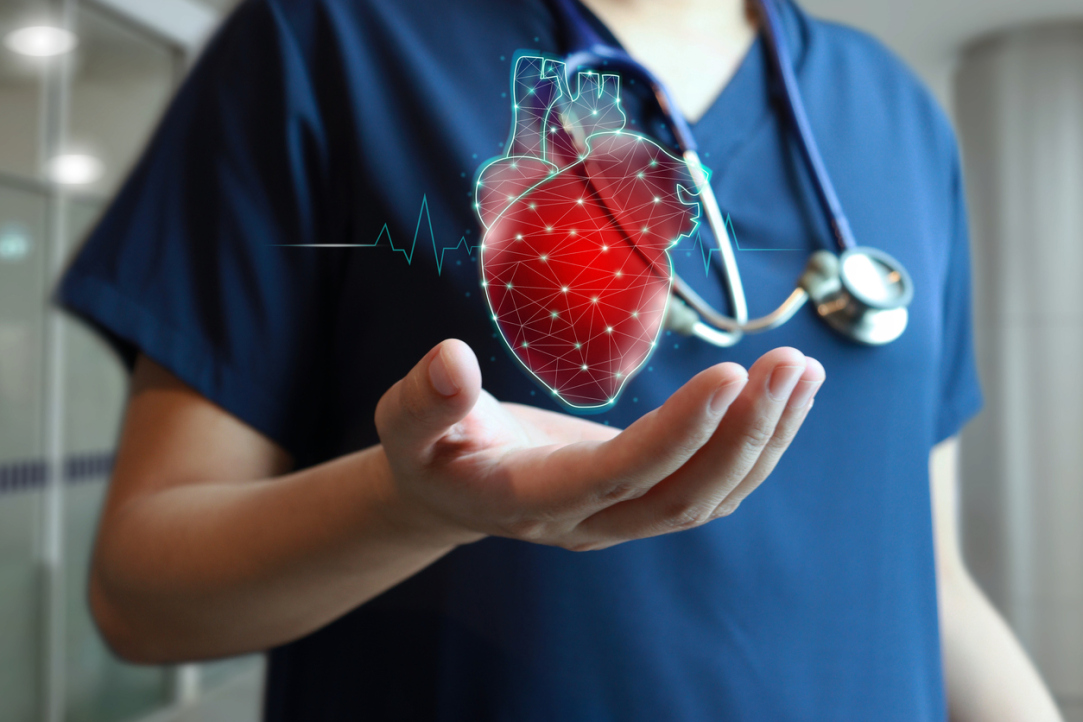
The application of mathematical models to the diagnosis and treatment of cardiovascular diseases contributes to the effective detection of patient predispositions and supports the selection of best treatment strategies. The use of mathematical models helps create new diagnostic tools and train neural networks to assist clinicians. Researchers from HSE University and colleagues from Saratov State Medical University are engaged in this work as part of the Mirror Laboratories project. In this interview, Natalya Stankevich, Senior Research Fellow at the International Laboratory of Dynamical Systems and Applications of the HSE Campus in Nizhny Novgorod, talks about what the collaboration has achieved so far.
Natalya Stankevich is the leader of the project 'Mathematical and Radiophysical Modelling of the Complex Dynamics of Living Systems for the Development of Methods for Analysing Experimental Data' carried out by the laboratory in collaboration with Saratov State Medical University (SSMU).
— How did the idea come about to create a Mirror Laboratory for interdisciplinary research and the application of mathematical models in medicine?
— The initiative came from HSE University, which has been hosting Mirror Laboratories project contests since 2020. At our laboratory, we were seeking to engage in applied work and welcomed the opportunity to collaborate with medical professionals and radiophysicists, combining our research to achieve new results through the integration of basic science with clinical and experimental studies.
— Which mathematical models have proven most applicable in medicine?
— There are numerous models based on different principles. Some represent abstract mathematical equations whose solutions produce signals which resemble, for instance, a typical ECG waveform. Some models are based on the physiological processes of the cardiovascular system. Others are hybrid models, where an abstract, mathematically simple model is enhanced with elements that reflect the physical system. Each of these models has its own area of application; some provide strictly mathematical results that can later be adapted to more physiologically accurate models.
Our partners have extensive experience in this field. The mathematical model they have been developing for many years describes the dynamics of autonomous cardiovascular regulation and captures the fundamental heart rhythm. The model comprises four main parts: two representing the autonomic nervous system, one regulating mean arterial pressure, and one accounting for the influence of respiration on these processes. The model features a large number of parameters (over 40), some of which our colleagues have derived from experimental data. It accurately replicates the dynamics of the human cardiovascular system.
Through our collaboration, we aim to identify which parameters are most important and could lead to changes in the cardiovascular system that are critical to patient health.
Building on previous work, our colleagues are now developing new, more realistic models of the human cardiovascular system. They are compiling an experimental database on the system’s specific nuances and creating sets of equations to capture effects that reflect individual health characteristics.

— In what areas of medicine and for which diseases are these developed models applied?
— The primary branch of medicine that our developments target is, of course, cardiology. This includes a wide range of cardiovascular diseases, such as chronic heart failure, hypertension, coronary heart disease, and others. There are also research areas and objectives focused on more narrow but related fields, such as psychology, sleep medicine, and sports medicine.
The models developed by our colleagues at SSMU make it possible to simulate various states of the cardiovascular system in healthy individuals, such as wakefulness, sleep, and physical activity. They also identified a set of parameters corresponding to arrhythmia, hypertensive crises, and vegetative blockade. Our partners have established a standard set of parameters through their analysis of experimental data, including ECG, blood pressure, and photoplethysmograms. (Photoplethysmography, or PPG, is a method for studying peripheral hemodynamics by measuring blood volume changes in the capillaries using red and infrared light directed at the skin—Ed.)
— How is this work organised?
— Our colleagues at the Cardiology Research Institute work at both the University Clinical Hospital of Saratov State Medical University and the Regional Clinical Cardiology Dispensary. They have access to a large volume of experimental data and conduct surveys of patients and medical professionals. Some of our colleagues are practicing cardiologists themselves. There is also a large archive of data accumulated over the years, which can be reprocessed and analysed in light of new hypotheses. One of our partners' most important developments is a method for calculating the phase synchronisation coefficient between components of the cardiovascular and respiratory systems. Using ECG and PPG analysis, they identify segments in the time series where synchronisation occurs. In 2024, our colleagues from SSMU analysed approximately 900 ECG recordings from patients with various cardiovascular diseases and calculated this coefficient, which effectively distinguishes healthy individuals from those with pathology.
Our team at HSE University is currently studying the conditions under which phase synchronisation occurs, ie we are developing the theoretical foundations explaining the emergence of phase synchronisation intervals. In the future, this theoretical model could help us understand what factors increase or decrease the duration of synchronisation intervals. It may also enable the development of modified models that generate data characteristic of patients with pathology, create realistic simulations, and produce surrogate data for machine learning—ultimately leading to devices that will assist doctors in routine tasks.
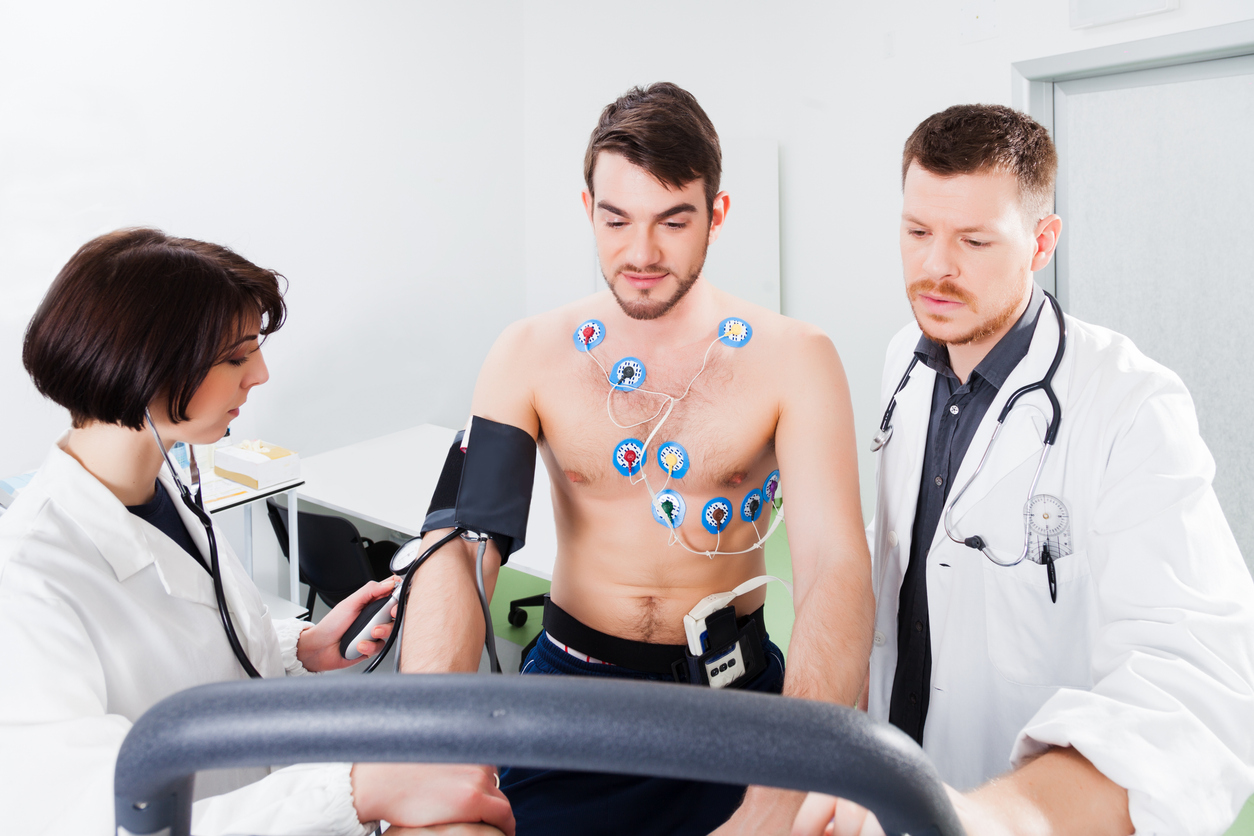
In addition to working with cardiovascular patients, our colleagues analyse data and develop models for healthy individuals under various conditions. Currently, experimental data is being collected by recording an electrocardiogram (ECG) at rest, followed by physical activity; then, after a brief rest (during which the heart rate typically recovers within a minute) a final ECG recording is taken. We subsequently process the data using the developed models to analyse how quickly the subject recovers, and we calculate indicators that characterise the complexity and randomness of the signal. Our partners from SSMU have shown that a healthy cardiovascular system exhibits a heart rate with natural randomness, while reduced randomness indicates disruption in rhythm regulation and may signal the presence of disease. Perhaps in the future, our clinical colleagues will be able to draw new insights from this data.
— How is your interaction going?
— Our key partner is Saratov State Medical University, and some project participants are physicists and radiophysicists who have built close contacts with medical professionals through many years of collaboration. While dedicating significant time to applied topics, we also aim to establish a solid theoretical foundation, advance dynamical systems theory, and apply its concepts to inspire new clinical experiments.
We are now in the third year of the project, and our medical partners have started proposing new objectives and designing experiments that we could validate through model-based calculations.
— How important is fundamental mathematics for creating models applicable to medicine?
— We are developing methods to verify the reliability and accuracy of our calculations. As part of one of the project’s objectives, we calculate the largest Lyapunov exponent, which indicates the presence of chaotic behaviour in the system. A positive value signifies that the system is functioning chaotically.
In the context of this objective, the main problem is to determine the nature of the non-periodicity in ECG signals. An open question remains: are we observing a periodic regime disrupted by noise, or is the cardiovascular system inherently governed by complex dynamics, with chaos as a fundamental property?
When calculating the Lyapunov exponent, a persistent challenge has been to distinguish between the contributions of noise and the intrinsic chaotic behaviour of the dynamical system. We applied statistical methods to propose a way to assess the contribution of noise and its role in the dynamical system. We were able to demonstrate that overall, the system’s dynamics are chaotic, which is an inherent property of the dynamical system itself. Noise affects the system, and depending on its characteristics, it can disrupt the structure of the chaotic attractor. That is why we need models that account for all these factors and enable us to assess their impact on the dynamic indicator.
Another objective that we are pursuing with our partners is studying the dynamics of cardiomyocytes, or heart muscle cells. Among them are typical cells that only contract, and atypical ones that transmit impulse signals and behave like neurons, functioning based on the Hodgkin–Huxley principle. We are investigating the idea that multistability in cardiomyocytes may predispose individuals to various arrhythmias. At this stage, we are using a relatively simple model to study scenarios involving the development and disruption of multistability. This study is important not only for medical applications but also for advancing bioimplants and tissue engineering—where damaged areas of heart tissue that fail to send proper signals, leading to arrhythmia, can be recreated or replaced.
— What fundamental mathematical problems are you aiming to solve?
— It would be ideal if we could rigorously prove the existence of a chaotic attractor in a model of the human cardiovascular system. However, this is quite challenging for a realistic model. We are working to illustrate some classic bifurcation scenarios that lead to the development of chaos. Demonstrating the development and evolution of chaos in stages, based on a physiologically sound model, would provide strong evidence that a certain model exhibits genuine chaotic behaviour—an important factor in addressing a number of medical problems as well.
Olga Posnenkova, Head of the Atherosclerosis and Chronic Coronary Heart Disease Department of the Research Institute of Cardiology at SSMU
— In recent years, we have made significant progress toward creating and using comprehensive digital twins of individual physiological systems that accurately mimic the processes in both healthy individuals and patients with various diseases. Digital twins are models that enable the prediction of a system’s response to specific impacts under controlled conditions—such as changes in operating parameters or the effect of drugs with different mechanisms of action.
Our collaboration with HSE University through the Mirror Laboratories project enables us to apply mathematical methods to study dynamic processes in the human cardiovascular system, compare results with existing data, and further improve the digital model of circulatory regulation. Mathematics experts broaden our understanding of how to analyse traditionally recorded biological signals, help us identify what information can be extracted from the chaotic components of cardiovascular signals, and determine how to manage health based on these insights. We hope that together we can advance into the field of translational medicine, where the results of basic research find application in real clinical practice.
The Mirror Laboratories format has proven to be an effective mechanism for collaboration. The regular exchange of expertise throughout several years of the project has enabled us to build an interdisciplinary team of like-minded individuals. We have not only expanded our knowledge in mathematical modelling but also learned to understand each other, find common ground, and lay the foundation for long-term collaboration focused on advancing our joint developments.

See also:

HSE University to Develop Predictive Analytics System for Icebreaker Motors
Industrial automation is one of the key applications of artificial intelligence. A predictive analytics system for large electric motors is among the solutions being developed for the industry as part of HSE University’s Strategic Technological Project ‘Multi-Agent Platform of AI Solutions for Industry-Specific Tasks.’ What is predictive analytics, how can it improve the operation of electric motors, and what specialists joined forces to develop this technology? Anton Zarubin, Dean of the School of Computer Science, Physics, and Technology at HSE University–St Petersburg and the project development coordinator, explains in this interview with the HSE News Service.
5th Fall into ML Conference to Bring Together Leading AI Researchers
The AI and Digital Science Institute at the HSE Faculty of Computer Science invites researchers, developers and everyone shaping the future of technology to the fifth, anniversary edition of the Fall into Machine Learning conference (Fall into ML 2026). The event will take place on October 23–24, 2026, at the HSE Cultural Centre in Moscow and will become the key meeting point for Russia’s AI community.
HSE University Expands Cooperation with Malaysia in Technology Foresight
HSE University researchers will take part in a study of the future of engineering education in Malaysia, while the Malaysian Industry-Government Group for High Technology (MIGHT) will use the iFORA big-data analysis system to validate the findings of its foresight research. These are the outcomes of a visit by HSE representatives to Kuala Lumpur.
Scientists Train Neural Network to Generate Process Plans from 3D Models
Researchers at the HSE FCS AI and Digital Science Institute have developed CAD2TechSpec, a framework that converts 3D models of mechanical parts into machining process plans—step-by-step instructions for machine tools. The solution aims to reduce the time required for the design and preparation of technical process documentation in mechanical engineering, aircraft manufacturing, and other high-tech industries. The study findings have been published in PeerJ Computer Science.
Biologists Discover 'Molecular Fingerprint' of Preeclampsia
Researchers at HSE University employed a new method to model hypoxia in placental cells during pregnancies complicated by preeclampsia and identified molecular markers of tissue hypoxia. Since hypoxia is one of the key mechanisms underlying preeclampsia, these findings are important for a more accurate and timely diagnosis of the disease and for the development of effective treatment methods. The paper has been published in Placenta.
Laboratory of Future Networks: HSE Telecommunications Research Institute Develops 5G/6G Research Testbed
The 5G/6G testbed at the HSE Telecommunications Research Institute is becoming a research platform, an educational laboratory, and a foundation for developing new software components for future networks. It makes it possible not only to observe how a mobile network operates, but also to change its operating conditions and measure the results: data-transmission speed, latency, errors, radio-resource utilisation, and other parameters. Based on the testbed, researchers plan to develop MIMO, O-RAN, xApp, and IAB technologies, as well as experiment with artificial intelligence.
‘Hedgehog’ Versus ‘Relatives’: Researchers Measure How the Brain Responds to Unexpected Words During Natural Speech
Russian neurophysiologists, including researchers from HSE University, have demonstrated the feasibility of using event-related fields (ERFs) to study brain activity during natural speech perception. The researchers showed that this approach can be applied not only to individual words but also to continuous speech. Their findings indicate that words whose meanings differ significantly from the preceding context require longer processing times. The study also reveals that the brain processes function words in two stages: first, it identifies their grammatical role and then uses this information to predict the next word. The study has been published in Frontiers in Human Neuroscience.
Hybrid Intelligence: Competencies in the Age of AI Discussed at Technoprom-2026
Artificial intelligence is not creating new professions, but rather transforming the nature of existing ones. This was the conclusion reached by participants in the panel session ‘Hybrid Intelligence: Digital and Human Drivers of Development,’ organised by the Institute for Statistical Studies and Economics of Knowledge (ISSEK) at HSE University as part of the 13th International Forum of Technological Development (Technoprom-2026). The experts discussed how the nature of work is changing, which skills are becoming increasingly sought after, and what prevents companies from fully capitalising on new technologies.
Scientists Develop New Solution for 6G Communication Systems
A terahertz neuromorphic circuit developed by scientists at HSE University could make 6G communication systems both more accurate and energy-efficient. The circuit enables indoor tracking of mobile devices with an accuracy of up to 99%. The results were presented at PIERS 2026, an international symposium on Photonics and Electromagnetism held in China.
Scientists Develop Algorithm for More Reliable Processors in Data Centres
Researchers from HSE MIEM and Samara University have developed the LRF-3D algorithm to automatically bypass idle nodes in three-dimensional networks-on-chip. Thanks to its hierarchical architecture, the algorithm outperforms existing solutions in both speed and path accuracy, improving processor reliability for use in data centres, supercomputers, and AI computing. The source code and test results are publicly available.